

Over the past six months, Sprouts’s stock price fell to $66.66. Shareholders have lost 11.9% of their capital, which is disappointing considering the S&P 500 has climbed by 18.4%. This was partly driven by its softer quarterly results and might have investors contemplating their next move.
Following the pullback, is now the time to buy SFM? Find out in our full research report, it’s free.
Why Does SFM Stock Spark Debate?
Playing on the secular trend of healthier living, Sprouts Farmers Market (NASDAQ:SFM) is a grocery store chain emphasizing natural and organic products.
Two Positive Attributes:
1. New Stores Opening at Breakneck Speed
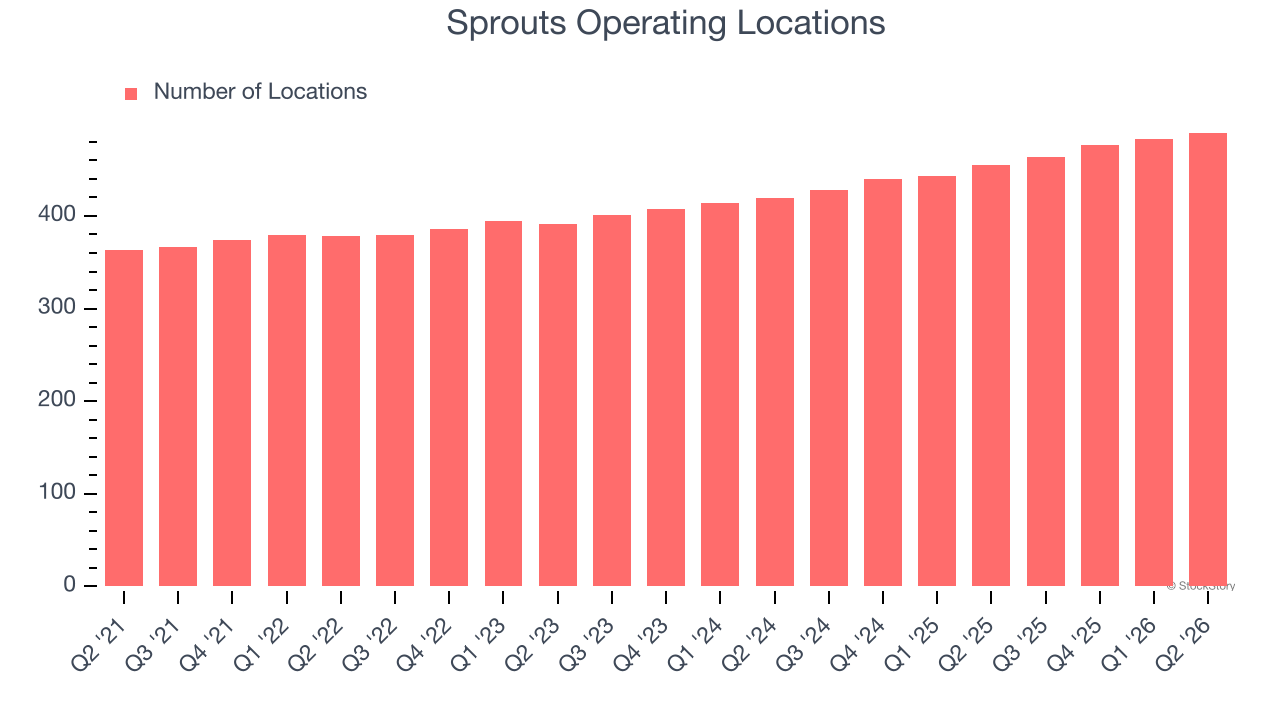
A retailer’s store count influences how much it can sell and how quickly revenue can grow.
Sprouts sported 490 locations in the latest quarter. Over the last two years, it has opened new stores at a rapid clip by averaging 8% annual growth, among the fastest in the consumer retail sector. This gives it a chance to become a large, scaled business over time.
When a retailer opens new stores, it usually means it’s investing for growth because demand is greater than supply, especially in areas where consumers may not have a store within reasonable driving distance.
2. Surging Same-Store Sales Show Increasing Demand
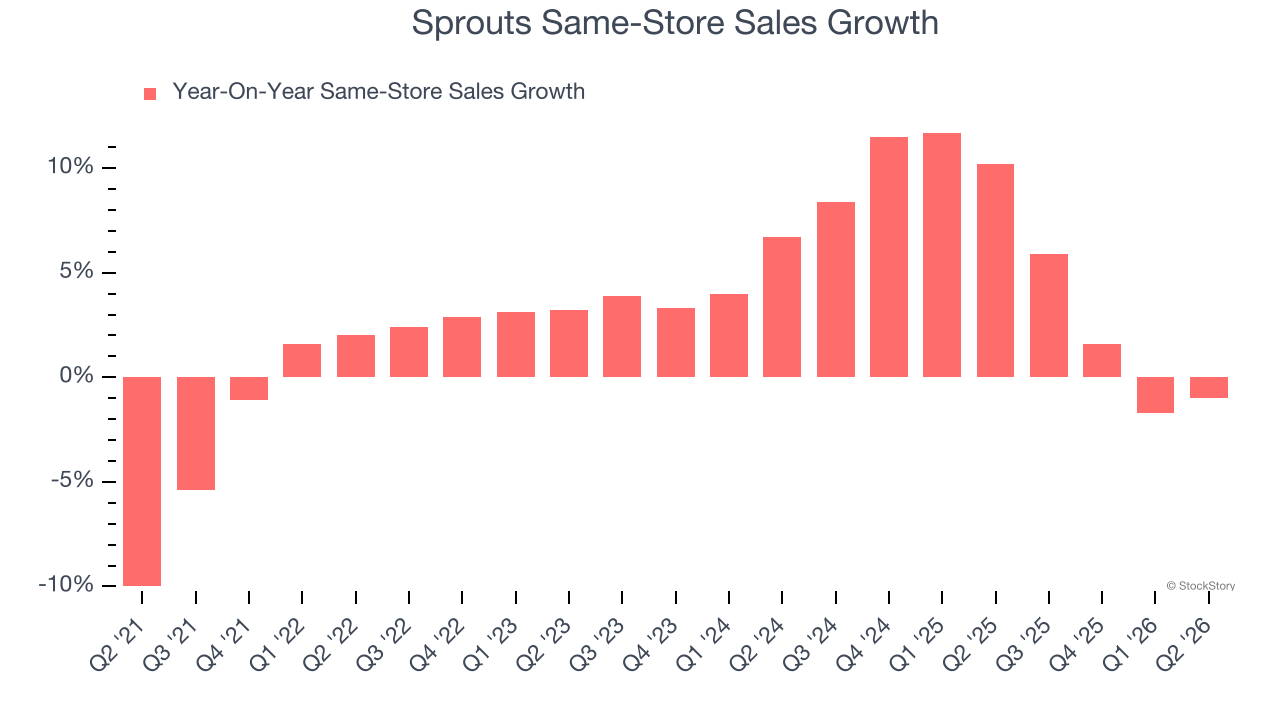
Same-store sales is an industry measure of whether revenue is growing at existing stores, and it is driven by customer visits (often called traffic) and the average spending per customer (ticket).
Sprouts has been one of the most successful retailers over the last two years thanks to skyrocketing demand within its existing locations. On average, the company has posted exceptional year-on-year same-store sales growth of 5.8%.
One Reason to Be Careful:
Low Gross Margin Hinders Flexibility
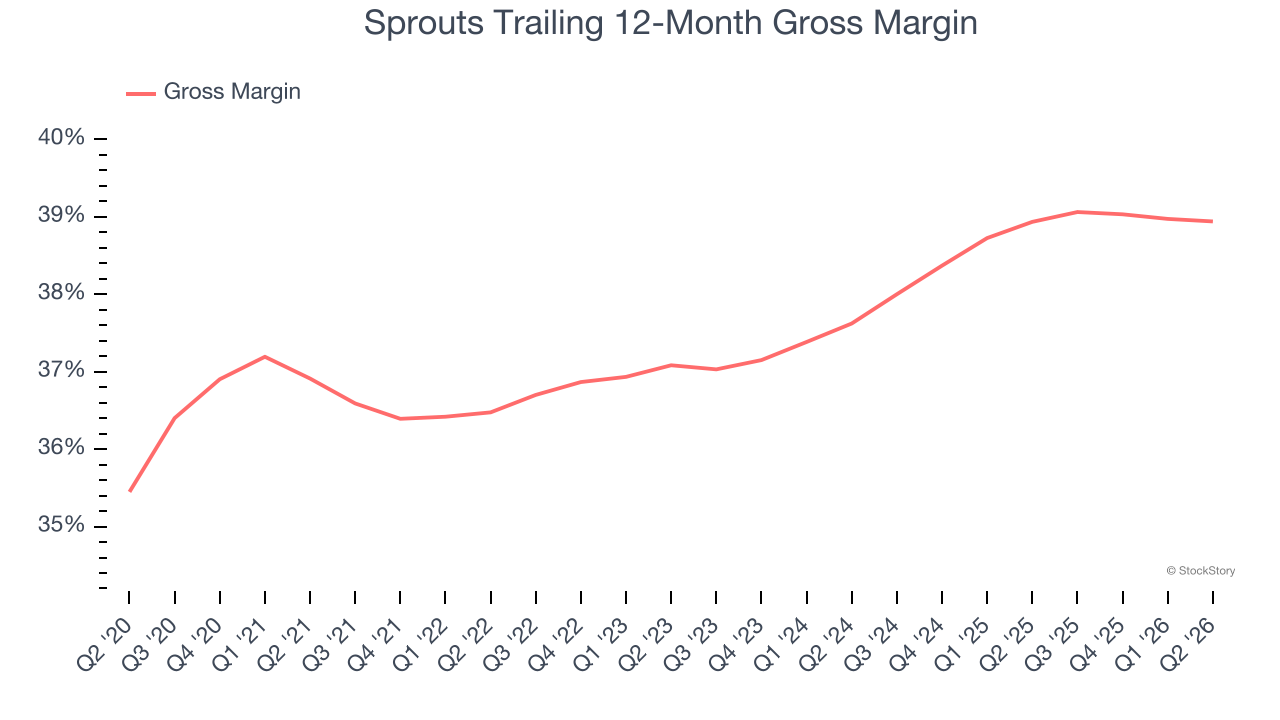
We prefer higher gross margins because they not only make it easier to generate more operating profits but also indicate product differentiation, negotiating leverage, and pricing power.
Sprouts’s gross margin is slightly below the average retailer, giving it less room to invest in areas such as marketing and talent to grow its brand. As you can see below, it averaged a 38.9% gross margin over the last two years. That means Sprouts paid its suppliers a lot of money ($61.06 for every $100 in revenue) to run its business.
Final Judgment
Sprouts’s positive characteristics outweigh the negatives. After the recent drawdown, the stock trades at 11.6× forward P/E (or $66.66 per share). Is now a good time to initiate a position? See for yourself in our in-depth research report, it’s free.
High-Quality Stocks for All Market Conditions
WHILE YOU’RE HERE: Top 9 Market-Beating Stocks. The best stocks don’t just beat the market once. They do it again. And again. Robust revenue growth, rising free cash flow, returns on capital that leave their competition in the dust. The market has already rewarded these businesses.
But our AI platform says the party isn’t over. Find out which 9 stocks made the cut this week — FREE. Get Our Top 9 Market-Beating Stocks for Free HERE.
Stocks that have made our list include now familiar names such as Nvidia (+1,460% between June 2020 and June 2025) as well as under-the-radar businesses like the once-small-cap company Comfort Systems (+1,154% between June 2020 and June 2025). Find your next big winner with StockStory today.