

What a fantastic six months it’s been for Grocery Outlet. Shares of the company have skyrocketed 72.9%, hitting $11.29. This was partly due to its solid quarterly results, and the performance may have investors wondering how to approach the situation.
Is there a buying opportunity in Grocery Outlet, or does it present a risk to your portfolio? Dive into our full research report to see our analyst team’s opinion, it’s free.
Why Do We Think Grocery Outlet Will Underperform?
We’re glad investors have benefited from the price increase, but we’re passing on Grocery Outlet for now. Here are three reasons we avoid GO, plus one stock we’d rather own.
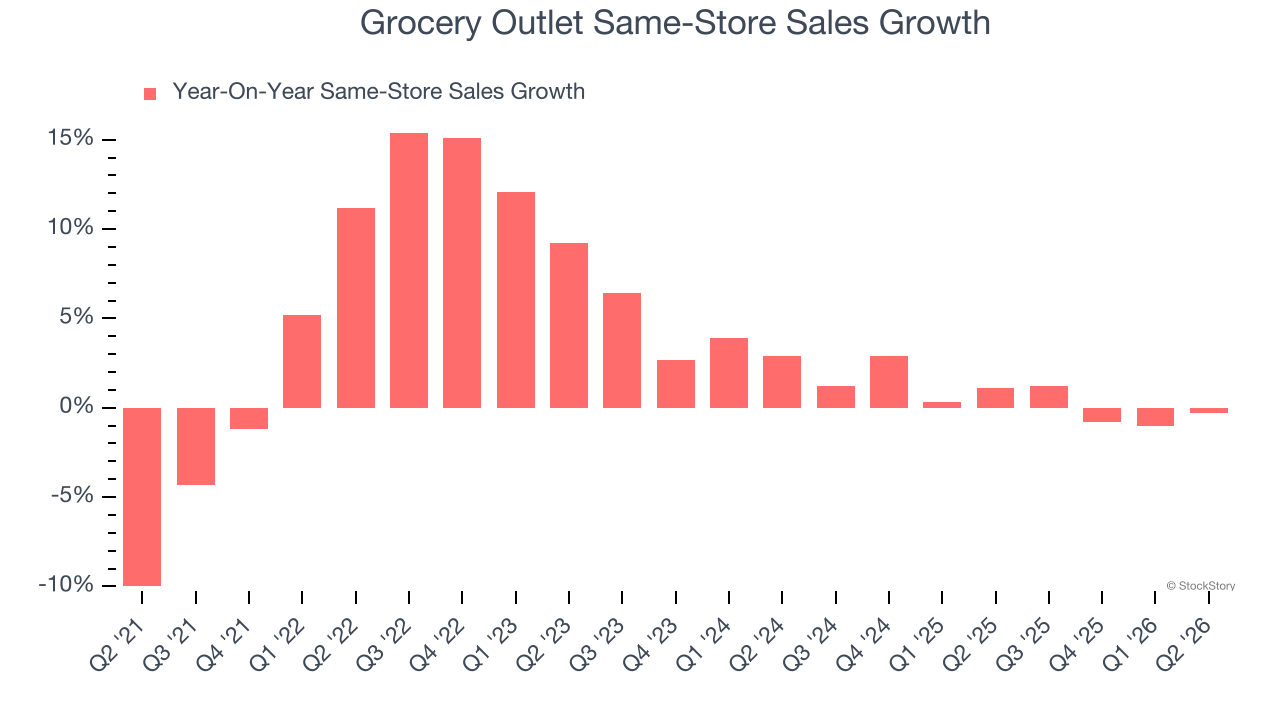
1. Flat Same-Store Sales Indicate Weak Demand
Same-store sales is a key performance indicator used to measure organic growth at brick-and-mortar shops for at least a year.
Grocery Outlet’s demand within its existing locations has barely increased over the last two years as its same-store sales were flat.
2. Shrinking Operating Margin
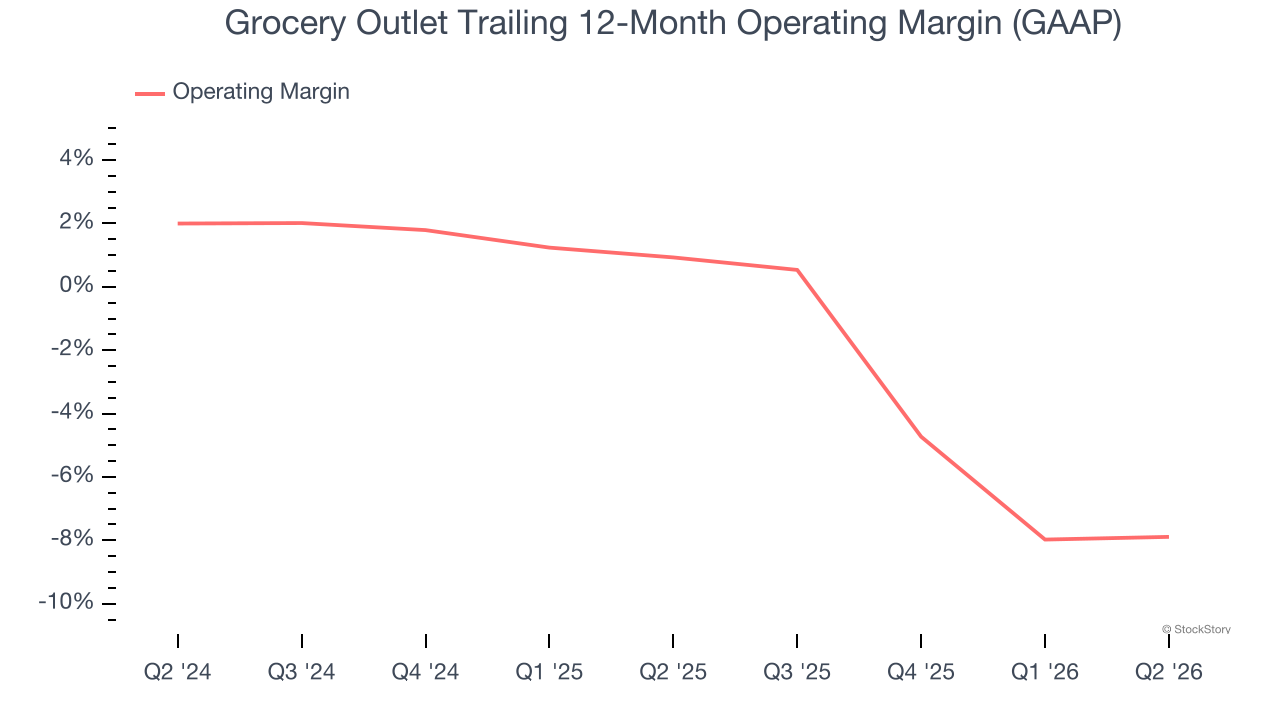
Operating margin is an important measure of profitability for retailers as it accounts for all expenses necessary to run a store, including wages, inventory, rent, advertising, and other administrative costs.
Looking at the trend in its profitability, Grocery Outlet’s operating margin decreased by 8.8 percentage points over the last year. This raises questions about the company’s expense base because its revenue growth should have given it leverage on its fixed costs, resulting in better economies of scale and profitability. Grocery Outlet’s performance was poor no matter how you look at it - it shows that costs were rising and it couldn’t pass them onto its customers. Its operating margin for the trailing 12 months was negative 7.9%.
3. High Debt Levels Increase Risk
Debt is a tool that can boost company returns but presents risks if used irresponsibly. As long-term investors, we aim to avoid companies taking excessive advantage of this instrument because it could lead to insolvency.
Grocery Outlet’s $1.85 billion of debt exceeds the $74.2 million of cash on its balance sheet. Furthermore, its 7× net-debt-to-EBITDA ratio (based on its EBITDA of $243.4 million over the last 12 months) shows the company is overleveraged.
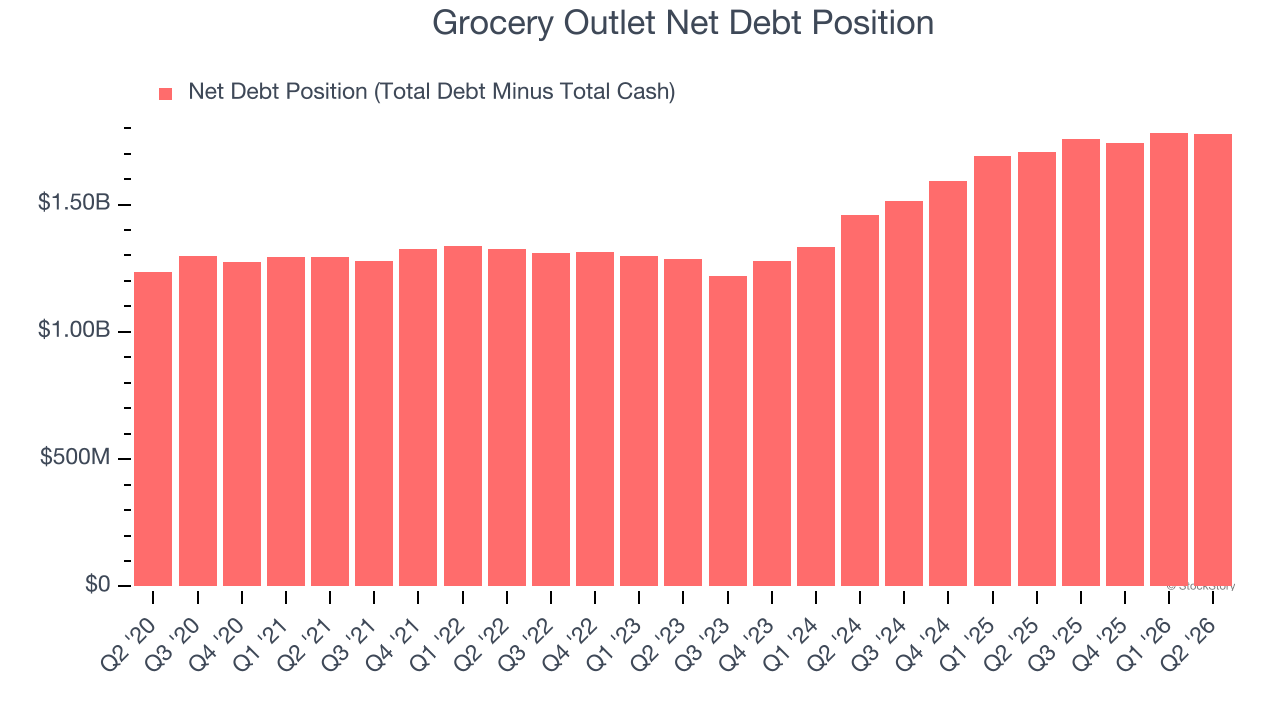
At this level of debt, incremental borrowing becomes increasingly expensive and credit agencies could downgrade the company’s rating if profitability falls. Grocery Outlet could also be backed into a corner if the market turns unexpectedly – a situation we seek to avoid as investors in high-quality companies.
We hope Grocery Outlet can improve its balance sheet and remain cautious until it increases its profitability or pays down its debt.
Final Judgment
We cheer for all companies serving everyday consumers, but in the case of Grocery Outlet, we’ll be cheering from the sidelines. After the recent surge, the stock trades at 19.3× forward P/E (or $11.29 per share). This multiple tells us a lot of good news is priced in - we think other companies feature superior fundamentals at the moment. We’d recommend looking at a top digital advertising platform riding the creator economy.
Stocks We Would Buy Instead of Grocery Outlet
ONE MORE THING: Top 6 Stocks for This Week. This market is separating quality stocks from expensive ones fast. AI is taking down whole sectors with no warning. In a rotation this fast, you need more than a list of good companies.
Our AI system flagged Palantir before it ran 1,662% between October 2022 and February 2026. AppLovin before it ran 753% between February 2024 and February 2026. Nvidia before it ran 1,178% between January 2023 and February 2026. Each week it produces 6 new names that pass the same tests. Get Our Top 6 Stocks for Free HERE.
Stocks that have made our list include now familiar names such as Nvidia (+1,460% between June 2020 and June 2025) as well as under-the-radar businesses like the once-small-cap company Comfort Systems (+1,154% between June 2020 and June 2025). Find your next big winner with StockStory today.