

Over the last six months, Hillman’s shares have sunk to $7.31, producing a disappointing 12.7% loss - a stark contrast to the S&P 500’s 18.4% gain. This might have investors contemplating their next move.
Is now the time to buy Hillman, or should you be careful about including it in your portfolio? Get the full breakdown from our expert analysts, it’s free.
Why Is Hillman Not Exciting?
Even though the stock has become cheaper, we’re cautious about Hillman. Here are three reasons why HLMN doesn’t excite us, plus one stock we’d rather own.
1. Long-Term Revenue Growth Disappoints
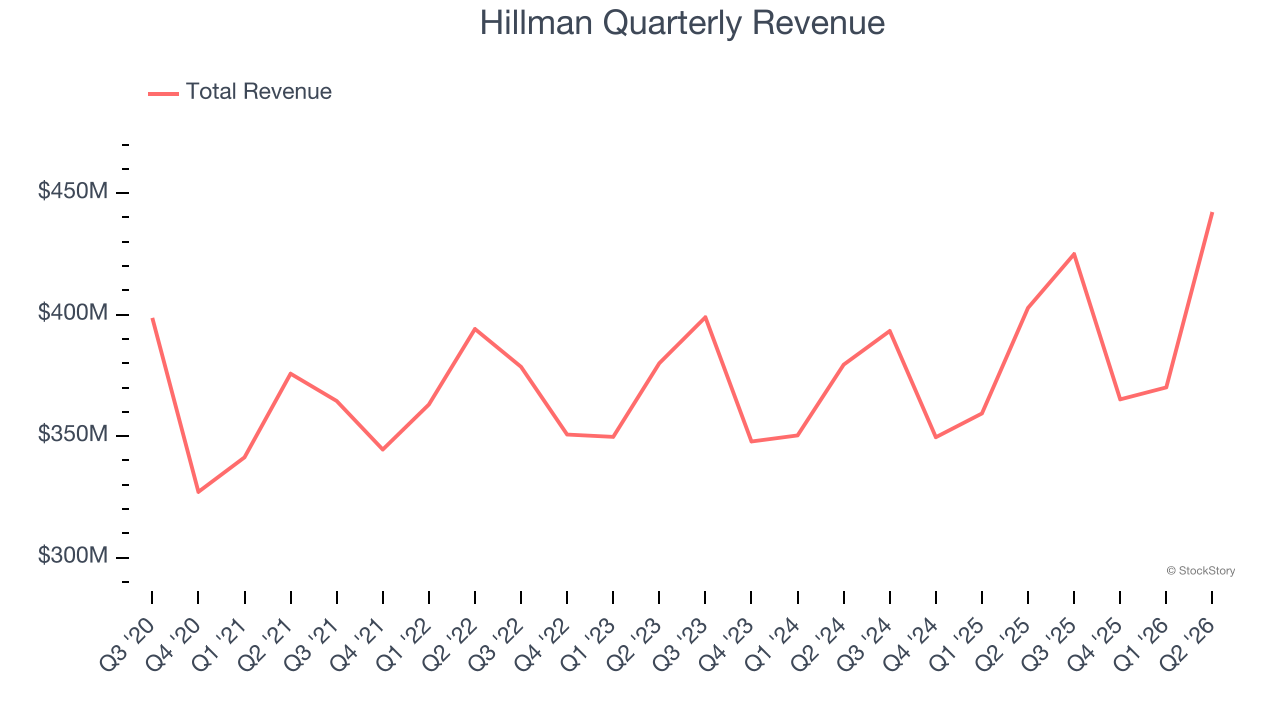
Reviewing a company’s long-term sales performance reveals insights into its quality. Even a bad business can shine for one or two quarters, but a top-tier one grows for years. Unfortunately, Hillman’s 2.1% annualized revenue growth over the last five years was sluggish. This was below our standards.
2. Weak Operating Margin Could Cause Trouble
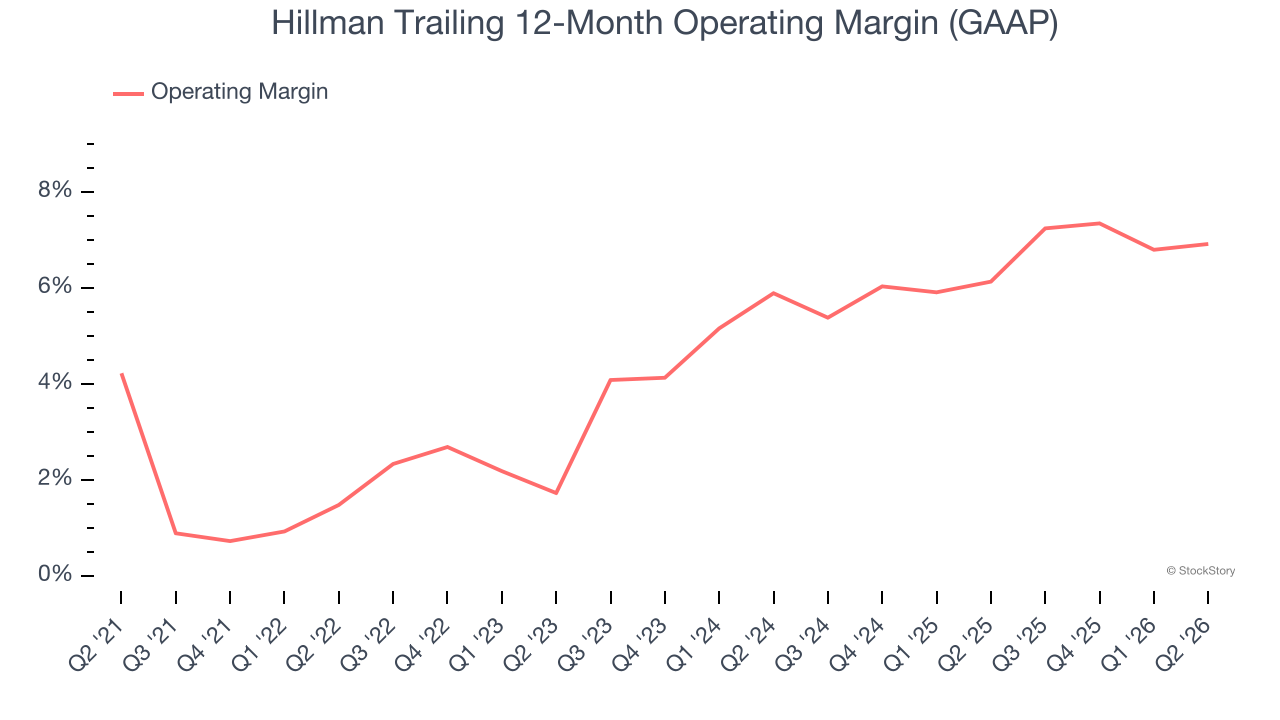
Operating margin is one of the best measures of profitability because it tells us how much money a company takes home after procuring and manufacturing its products, marketing and selling those products, and most importantly, keeping them relevant through research and development.
Hillman was profitable over the last five years but held back by its large cost base. Its average operating margin of 4.5% was weak for an industrials business. This result is surprising given its high gross margin as a starting point.
3. Previous Growth Initiatives Haven’t Impressed
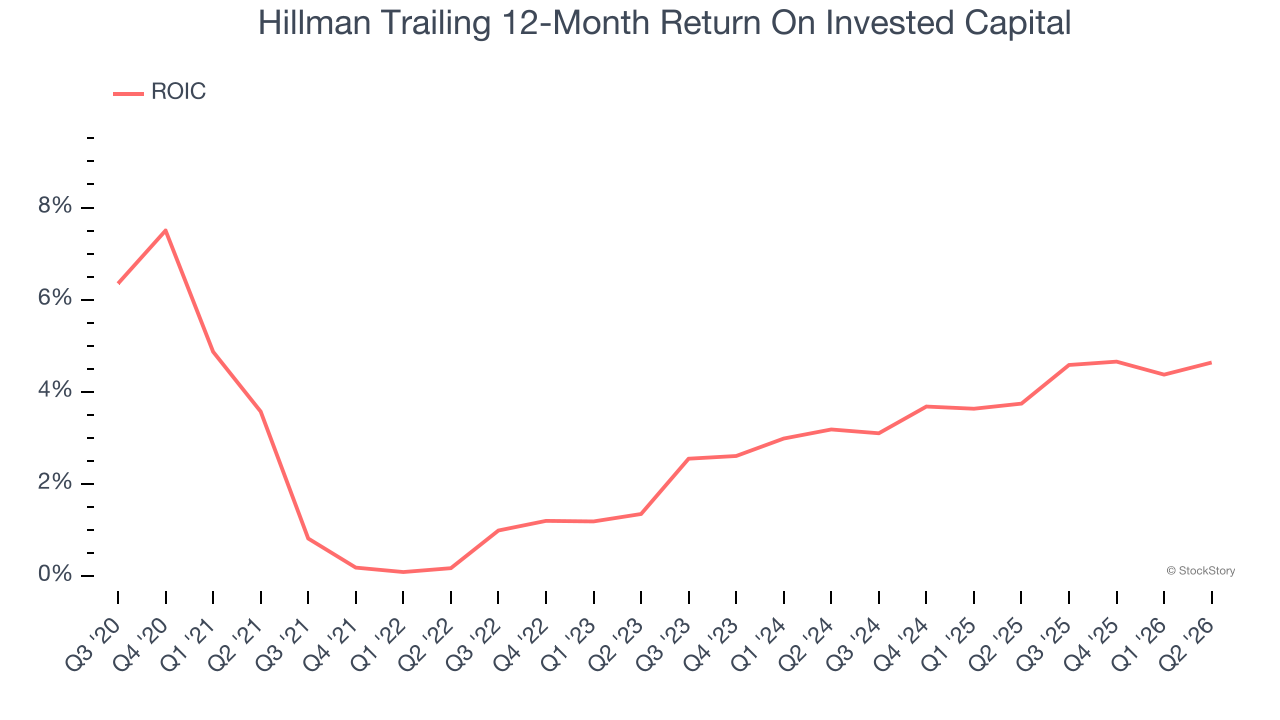
Growth gives us insight into a company’s long-term potential, but how capital-efficient was that growth? Enter ROIC, a metric showing how much operating profit a company generates relative to the money it has raised (debt and equity).
Hillman historically did a mediocre job investing in profitable growth initiatives. Its five-year average ROIC was 2.6%, lower than the typical cost of capital (how much it costs to raise money) for industrials companies.
Final Judgment
Hillman isn’t a terrible business, but it isn’t one of our picks. Following the recent decline, the stock trades at 11× forward P/E (or $7.31 per share). While this valuation is fair, the upside isn’t great compared to the potential downside. We’re pretty confident there are superior stocks to buy right now. Let us point you toward our favorite semiconductor picks and shovels play.
Stocks We Like More Than Hillman
ONE MORE THING: Top 5 Growth Stocks. The biggest stock winners almost always had one thing in common before they ran. Revenue growing like crazy. Meta. CrowdStrike. Broadcom. Our AI flagged all three. They returned 315%, 314%, and 455%, respectively.
Find out which 5 stocks it’s flagging this month — FREE. Get Our Top 5 Growth Stocks for Free HERE.
Stocks that have made our list include now familiar names such as Nvidia (+1,460% between June 2020 and June 2025) as well as under-the-radar businesses like the once-micro-cap company Kadant (+214% between June 2020 and June 2025). Find your next big winner with StockStory today.